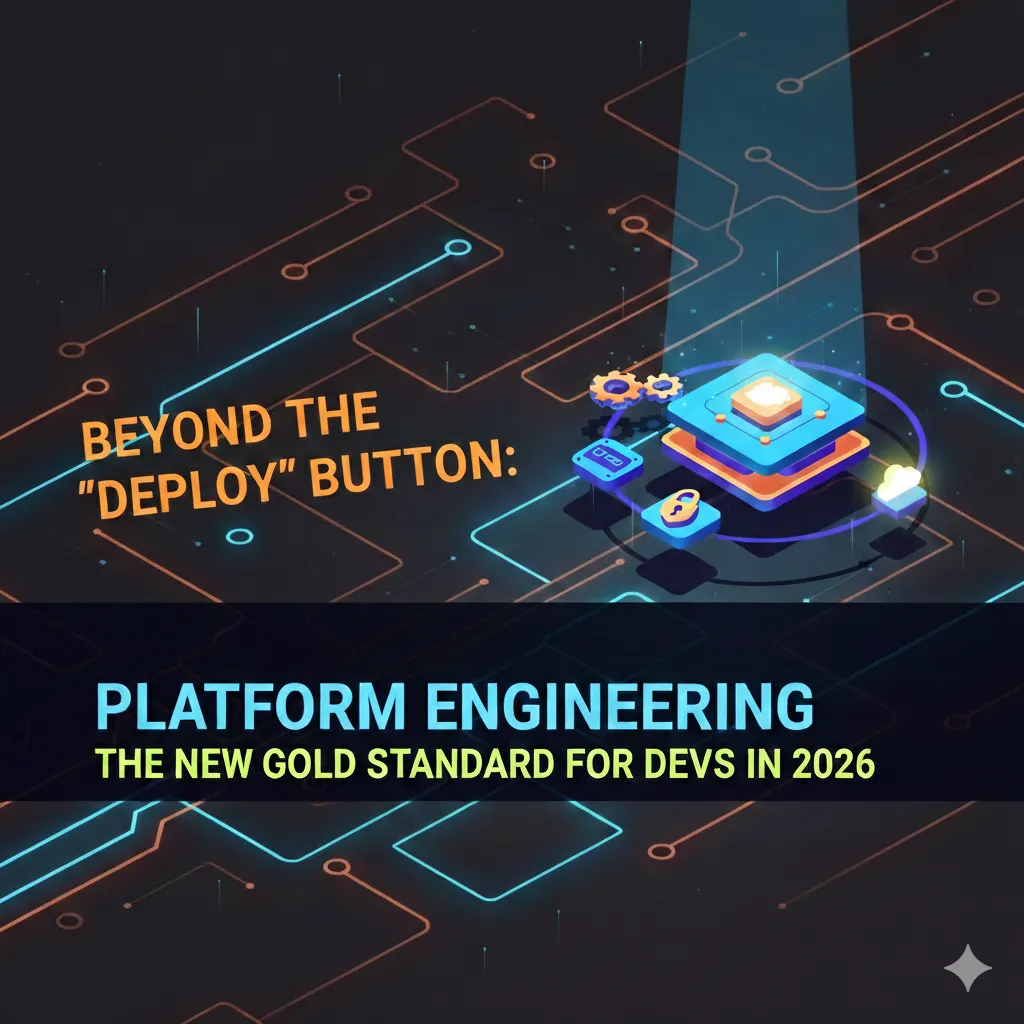
Beyond the "Deploy" Button: Why Platform Engineering is the New Gold Standard for Devs in 2026
 Grey Learn
For years, the career advice for aspiring developers was simple: "Learn to code, learn a bit of Docker, and hit deploy." If you could get an app running on a server, you were ahead of the pack.
But as we head toward 2026, the "pack" has moved. The cloud has become so complex—with microservices, Kubernetes clusters, and AI-native integrations—that simply knowing how to deploy isn't enough. Companies are no longer just looking for developers who can write code; they are looking for professionals who understand Platform Engineering.
If you’re a student or a fresher looking to future-proof your career, it’s time to look past the code and start looking at the "Internal Developer Platform" (IDP).
The Death of "Throwing it Over the Wall"
In the old days, developers wrote code and threw it "over the wall" to the Operations team to fix and run. DevOps tried to break that wall down, but it often ended up making developers’ lives harder. Suddenly, a fresher was expected to be a coding genius and a cloud networking expert and a security specialist.
The result? Burnout and "cognitive overload."
Enter Platform Engineering. This is the discipline of designing and building toolchains that provide "Golden Paths"—pre-built, secure, and automated ways for developers to build and scale software without needing to be a PhD in AWS. In 2026, the highest-paid freshers won't just be the ones writing the smoothest React hooks; they’ll be the ones who can build the systems that make development seamless.
The 2026 Skill Stack: What You Actually Need
If you want to be a top-tier candidate in the next 12–24 months, your "Hello World" projects need an upgrade. Here is the shift you need to make:
From Manual Setup to Infrastructure as Code (IaC): Clicking buttons in the AWS console is a hobby; writing Terraform or Pulumi scripts to automate that infrastructure is a career.
From "Just Code" to DevSecOps: Security isn't a final check anymore. It’s "shifted left." Understanding how to automate security scanning within your CI/CD pipeline is now a non-negotiable requirement.
AIOps Literacy: You don't need to build AI, but you must know how to use AI-driven observability tools (like New Relic or Datadog) to predict system failures before they happen.
Kubernetes (K8s) Foundations: Kubernetes has won the container war. Even a basic understanding of how to orchestrate containers will put you in the top 10% of applicants.
Why "Learning by Watching" is Failing You
You can watch a 20-hour YouTube playlist on Cloud Computing, but the moment a real-world server goes down due to a "DNS misconfiguration" or a "permissions error," that video won't help you.
The cloud is messy. It’s loud. It breaks in ways that documentation doesn't cover. This is why project-based learning is the only way to survive. When you build a project from scratch—dealing with real API limits, real security breaches, and real deployment failures—you develop "muscle memory" that a certificate can't give you.
Employers in 2026 don't care what you know; they care what you have shipped.
Build Your Future with GreyLearn
At GreyLearn, we don't believe in passive learning. Our Cloud and DevOps tracks are designed around the Platform Engineering mindset. You won’t just learn how to code; you’ll learn how to build the automated ecosystems that modern tech giants like Netflix and Uber rely on.
From mastering GitOps to building your own Internal Developer Platform, our projects are modeled after real-world industry challenges. Don't just be a developer—be the engineer who builds the future.
Ready to build your first "Golden Path"? Explore our bootcamp courses today.