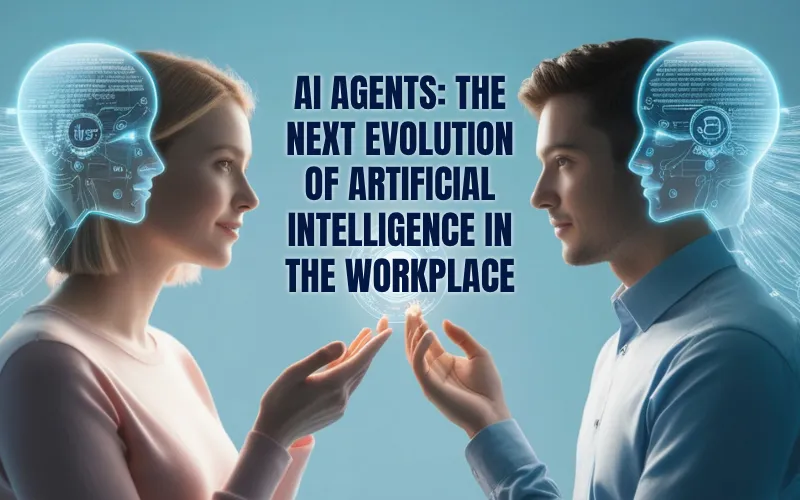
AI Agents: The Next Evolution of Artificial Intelligence in the Workplace
 Grey Learn

As we navigate the mid-2020s, we are witnessing a profound shift in the AI paradigm. We are moving past "Chatbots" and into the era of AI agents. While the first wave of AI was reactive—responding only when prompted—the current wave is proactive and autonomous. These autonomous AI systems are not just digital encyclopedias; they are digital employees capable of executing complex, multi-step workflows with minimal human intervention.
Defining the AI Agent
To understand the significance of this evolution, we must distinguish between a tool and an agent. A tool, like a calculator or a basic LLM, sits idle until you use it. An AI agent, however, is designed to achieve a goal. If you tell an AI agent, "Organize a webinar for next month," it doesn't just give you a checklist. It researches the best platforms, drafts the invite, checks your calendar for the best date, and can even interact with other APIs to book the "virtual room."
This transition toward AI workflow automation represents the "Holy Grail" of business efficiency. In 2026, companies aren't just looking for better software; they are building "Agentic Workforces."
The Impact on the Workplace
The primary advantage of AI automation tools in the form of agents is their ability to handle "asynchronous" work. They work in the background while you sleep or focus on other tasks.
In Research: An agent can spend all night scouring thousands of academic papers, synthesizing the data into a 10-page brief, and highlighting the gaps in current knowledge.
In Customer Support: Modern agents don't just answer questions; they solve problems. They can process a refund, update a shipping address, and cross-reference a customer's history to offer a personalized discount—all without a human clicking a single button.
In Operations: AI agents monitor supply chains, predicting shortages before they happen and automatically drafting emails to alternative suppliers for the human manager to approve.
The Future of AI Agents: From Assistants to Partners
The future of AI agents is one of deep integration. We are seeing the rise of "Multi-Agent Systems" where different AI agents talk to each other. A "Marketing Agent" might negotiate a budget with a "Finance Agent," with the human acting as the ultimate tie-breaker and strategic lead.
This shift changes the nature of what it means to be a "manager." In 2026, managing a team often involves managing both humans and a fleet of AI agents. You must be able to set clear objectives (KPIs) for your agents, monitor their performance, and ensure their actions align with company ethics and goals.
Skills Needed in the Agent Era
To thrive in this new landscape, professionals need a different toolkit.
Systemic Thinking: You need to understand how different tasks connect. Since agents handle workflows, you must be able to map those workflows out accurately.
Supervisory Proficiency: Because agents are autonomous, the risk of "automated errors" is high. Professionals must learn how to "audit" AI work effectively.
Human-in-the-Loop Integration: Learning where the AI should stop and the human should start is a critical skill. You don’t want an agent making high-stakes financial decisions without a human check, but you also don’t want to micromanage it and lose the efficiency gains.
For the modern professional, the goal is no longer to be the best "doer" of tasks, but the best designer of autonomous workflows. Those who master the delegation of work to AI agents will be the leaders of the 2026 economy.